Winter Escape to Maui: Where to Stay in Sunny Kīhei
Kīhei sits in Haleakalā's rain shadow, which is why it stays sunny through the months when most of the mainland does not. Winter is also humpback season, late November through early May, with whales visible from the sand and from oceanfront lanais. Here is what a Kīhei winter actually feels like, and how far ahead to book it.
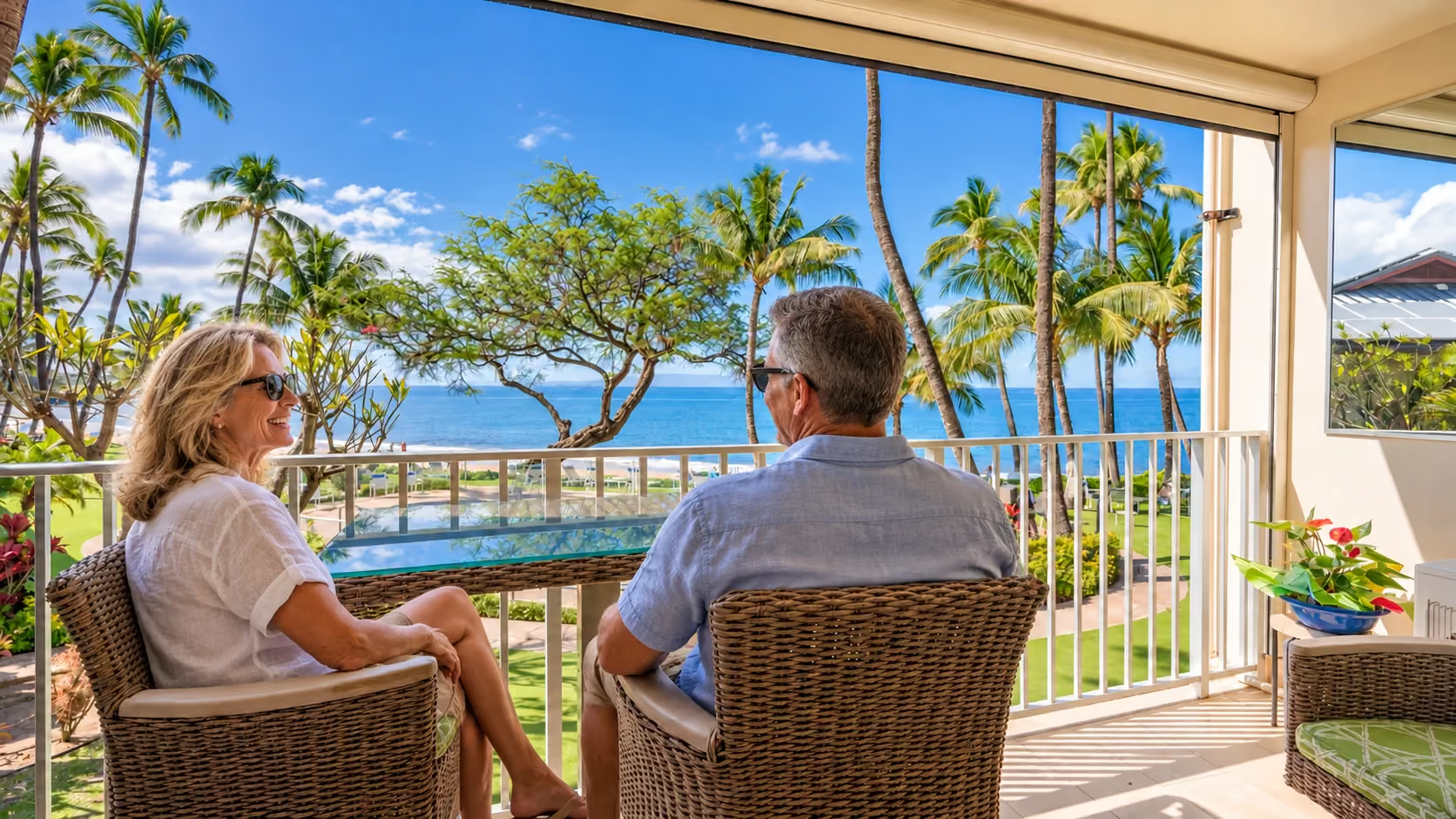
Escape winter in Kīhei, on Maui's leeward south shore, where Haleakalā's rain shadow holds the town to roughly 10 to 13 inches of rain a year and 300-plus sunny days while the windward side of the island catches the clouds. From December through March, daytime highs sit around 80 degrees, the ocean holds near 76, and humpback whales fill the channel offshore. The Hale Pau Hana, an oceanfront condominium property at 2480 South Kīhei Road, fronts Kamaʻole Beach Park II directly, so the sun, the sand, and the whales are all in front of you before you put shoes on.
Key takeaways
- Kīhei sits in Haleakalā's rain shadow on Maui's leeward south shore and collects roughly 10 to 13 inches of rain a year across 300-plus sunny days, which makes it the driest and sunniest base on the island for a winter trip.
- Winter daytime highs in Kīhei typically run around 80 degrees, evenings settle into the mid 60s, and the ocean holds around 75 to 77 degrees from December through March.
- Humpback whale season off Maui runs late November through early May and peaks January through March, when whales are visible from the sand at Kamaʻole Beach Park II and from the oceanfront lanais at The Hale Pau Hana.
- Winter swells break on Maui's north and west shores; south-facing Kīhei stays comparatively calm, and Kamaʻole Beach Park II has a sand bottom with Maui County lifeguards on duty daily from 8am to 6:45pm in summer and 7:30am to 6:15pm in winter.
- Mid December through early January is the most crowded and most expensive winter window in Kīhei; January through March delivers the same weather and the peak of whale season with easier availability.
Where should you go on Maui to escape winter?
Go to Kīhei, on the leeward south shore. Maui's weather is decided by Haleakalā. Trade winds arrive from the northeast, pile up against the 10,023-foot volcano, and drop their rain on the windward side, which is why Hāna and the upcountry slopes stay green and why Kīhei stays dry. Kīhei sits in the rain shadow, collecting roughly 10 to 13 inches of rain a year and 300-plus sunny days, which puts it among the driest towns in Hawaii. In winter, when the windward and upcountry parts of the island are at their wettest, that geography does the most work of the year.
The practical result: you can land at Kahului, drive 25 minutes, and spend a week in shorts while the rest of the island trades weather.
| Where on Maui | What winter feels like there | Drive from Kahului Airport (OGG) |
|---|---|---|
| Kīhei and South Maui | The driest, sunniest side of the island; showers pass in minutes; humpbacks in the channel offshore | about 16 miles, about 25 minutes |
| Wailea | The same leeward weather as Kīhei at resort prices, 3 miles south | About 25 minutes |
| West Maui (Kāʻanapali, Nāpili) | Also leeward and sunny, with winter surf hitting the exposed north-facing points | Roughly 45 to 60 minutes |
| Upcountry (Kula, Makawao) | Cool and often cloudy, with evenings that can drop into the 50s | About 40 minutes |
| North shore (Pāʻia, Haiku) | Windy and showery in winter; big-wave surf at Hookipa and Peahi | 15 to 25 minutes |
| Hāna and East Maui | The wettest corner of Maui; winter rain is frequent and road closures happen | 2.5 hours or more |
South Maui is open and welcoming visitors while Lāhainā recovers, and West Maui businesses that have reopened are worth a day trip north and your dollars while you are here. For a fuller look at how the two coasts differ, see South Maui vs West Maui.
What does winter weather actually feel like in Kīhei?
Warm days, cool evenings, and showers that arrive and leave inside ten minutes. From December through March, daytime highs in Kīhei typically sit around 80 degrees and evenings settle into the mid 60s. A long-sleeve shirt on the lanai after dark covers it; nothing heavier gets used.
Winter is the wetter half of Kīhei's year, which in a town this dry means roughly one to two inches a month, usually delivered as brief trade-wind showers that push through and leave a rainbow standing over the West Maui Mountains. Sustained rain in South Maui generally arrives with a Kona low, a winter system that swings the wind around from the southwest and parks moisture over the leeward side for a day or two before clearing.
| Month | Typical daytime high | Typical overnight low | Typical ocean temperature | What the month is like |
|---|---|---|---|---|
| December | About 81F | About 66F | About 77F | Whale numbers building; holiday crowds arrive around the middle of the month |
| January | About 80F | About 65F | About 76F | Peak whale season opens; the quietest weeks of winter follow New Year |
| February | About 80F | About 65F | About 76F | The peak whale month, with island-wide whale festival events |
| March | About 81F | About 66F | About 75F | Whales still plentiful; spring break traffic returns in the second half |
Those are long-term averages. Any given week can run warmer, cooler, or wetter, so check a forecast close to your dates and confirm current conditions with the front desk if you are planning around them.
How is winter in Kīhei different from summer?
The difference shows up in the water, the whales, and the direction the surf comes from. Air temperature moves surprisingly little.
| Dimension | Kīhei in winter (December to March) | Kīhei in summer (June to September) |
|---|---|---|
| Daytime high | About 80F | About 86 to 88F |
| Overnight low | Mid 60s | Low 70s |
| Ocean temperature | About 75 to 77F | About 79 to 81F |
| Rain | The wetter half of a very dry year: roughly 1 to 2 inches a month, in brief showers | Drier still, often nothing for weeks at a stretch |
| Whales | Humpbacks offshore late November through early May, peaking January through March | None; the humpbacks are feeding in Alaska |
| Surf | North and west shores take the large swells; Kīhei's south-facing beaches stay comparatively calm | South swells reach Kīhei, so the south shore gets its bigger surf now |
| Daylight | Sunset around 6pm in December and January, closer to 6:45pm by late March | Sunset just after 7pm |
| Crowds and rates | Highest of the year over the December holidays, steady January through March | Busy with families in July, quieter in September |
If you are still choosing months and want all twelve compared on weather, crowds, and price, see the best time to visit Kīhei. This page assumes winter is already decided.
When can you see whales from Kīhei in winter?
Humpback whale season off Maui runs from late November through early May, and it peaks from January through March. North Pacific humpbacks travel roughly 3,000 miles from Alaskan feeding grounds to the warm, shallow Maui Nui Basin, the protected water between Maui, Lānaʻi, Molokaʻi, and Kahoʻolawe, to breed and to calve. Kīhei looks straight into it.
That geography is why winter in Kīhei is a different trip from winter anywhere else warm. From the sand at Kamaʻole Beach Park II you can watch spouts, tail slaps, and full breaches without booking anything, and from an oceanfront lanai at The Hale Pau Hana you can do it with coffee in hand before breakfast. Shore surveys around Maui regularly tally hundreds of whales in a single February morning. Mornings are best, before the afternoon wind textures the water and hides the blows.
Boat trips leave from Māʻalaea Harbor, about 15 minutes north of Kīhei by car, and from the Kīhei Boat Ramp closer to town. Peak-season sailings fill weeks ahead, so reserve before you fly and confirm current prices directly with the operator. February also brings Pacific Whale Foundation's Maui Whale Festival and its Great Whale Count shoreline survey; check this season's dates before you plan around them. For shore-viewing spots, boat options, and how close boats are allowed to approach, see whale watching from Kīhei.
Should you book the holidays or January through March?
Both windows give you the same weather. They differ on price, crowding, and how many whales are in the channel.
| Winter window | What it is like | Rates and availability |
|---|---|---|
| Mid December to early January | The busiest and most expensive stretch of the Maui year. Beaches, restaurants, and the road south fill up. Whales are arriving and building in number. | Peak pricing. Many Kīhei condominiums set longer minimum stays across Christmas and New Year. Book earliest of any window. |
| Early January to mid February | Crowds drop sharply after the first week of January while the weather holds steady. Whale sightings climb toward their peak. | The best value inside peak whale season. Rates ease off holiday levels while staying above shoulder months. |
| Mid February to March | The peak of whale season, with the most reliable sightings from shore. Spring break and Easter traffic return in the second half of March. | Steady demand throughout. Late March books up with family travel. |
Nightly rates move constantly with unit size, floor, owner, and how far ahead you book, so treat any published range as a starting point and confirm current rates and minimum stays for your exact dates before you plan a budget around them.
How far ahead should you book a winter stay in Kīhei?
For the December holidays, plan on nine to twelve months. Oceanfront units and the larger floor plans go first, families rebook the same weeks year after year, and holiday minimum stays reduce the number of workable slots. For January through March, six to twelve months is usually enough, with the tightest competition around Presidents Day week and the February peak of whale season.
Two habits help. Book direct with the property, which puts its deposit and cancellation terms in writing and puts you in touch with someone who knows the individual units. And ask about minimum stays before you fall in love with a specific unit; at The Hale Pau Hana the minimum is seven nights from December 17 to April 30 and four nights the rest of the year. Anything you are told about rates, deposits, or cancellation windows is worth confirming in writing at the time of booking.
What should you pack for a Maui winter trip?
Beach clothes, one warm layer, and less of everything else than you expect.
- A light layer for evenings. A long-sleeve shirt or light sweatshirt covers the mid 60s on a lanai after sunset.
- A packable rain shell. Useful for the brief showers that blow through, and genuinely necessary if you drive up for Haleakalā sunrise from Kīhei, where the summit can sit near freezing before dawn.
- Mineral sunscreen. Maui County bans non-mineral sunscreen without a prescription, so the active ingredient needs to be zinc oxide or titanium dioxide; the county also recommends non-nano formulas. Leave chemical formulas at home or buy locally once you land.
- Binoculars. Whale watching from the lanai improves enormously with them.
- A rash guard or light wetsuit top if you chill easily. The ocean sits around 75 to 77 degrees in winter, comfortable for most swimmers and cooler than summer.
- Water shoes for the rocky entries at either end of the Kamaʻole beaches.
- Half the clothing you packed. Every unit at The Hale Pau Hana has a full kitchen, and the property has an on-site laundry facility, so a week of clothes covers a month.
Which Kīhei beaches stay calm in winter?
Winter swells come from the north and northwest and break on Maui's north and west shores. Kīhei faces south and southwest, which leaves the Kamaʻole beaches comparatively flat from December through March; the south shore takes its bigger surf in summer. Occasional swells wrap far enough around to raise shorebreak in Kīhei, and a Kona storm can churn the water for a day or two, so read the lifeguard flags and check the daily surf report before a long swim.
| Beach | Distance from The Hale Pau Hana | Winter conditions | Lifeguards |
|---|---|---|---|
| Kamaʻole Beach Park II | On property; the lawn ends at the sand | Sand bottom, usually the calmest and clearest of the three Kamaʻole beaches in the morning | Daily 8am to 6:45pm in summer and 7:30am to 6:15pm in winter |
| Kamaʻole Beach Park I | 0.3 miles north, about a 6-minute walk | Wide sand and gentle entry, with a rocky point at the south end for snorkeling | Daily 8am to 6:45pm in summer and 7:30am to 6:15pm in winter |
| Kamaʻole Beach Park III | 0.3 miles south, about a 6-minute walk | Big lawn and playground; shorebreak can get punchy when a swell wraps in | Daily 8am to 6:45pm in summer and 7:30am to 6:15pm in winter |
| Charley Young Beach | 0.4 miles north, about an 8-minute walk | Quieter and tucked below a residential street; calm on most winter mornings | None |
| Keawakapu Beach | 1 mile south, about a 20-minute walk or 4-minute drive | Long open sand running toward Wailea; excellent for a whale-spotting walk | None |
| Cove Park | 0.7 miles north, about a 14-minute walk | Kīhei's beginner surf break and lesson spot, small on most winter days | None |
Mornings are calmest everywhere in Kīhei, with the wind building through the afternoon. For how the three Kamaʻole parks differ from one another, see Kamaʻole Beach I vs II vs III. One parking note: Maui County's Park Maui program began charging non-resident vehicles at the paved lots at Kamaʻole I and Kamaʻole III in July 2026, with other locations expected to follow, so confirm current fees, hours, and covered lots before you park. Guests at The Hale Pau Hana park free on site, one car per unit, and walk to the sand.
Can you spend the whole winter in Kīhei?
Yes, and a lot of people do. Snowbird stays of a month or more are a long-standing Kīhei pattern, and the town is built for it: condominiums with full kitchens, laundry on site, Foodland at 1881 South Kīhei Road about 2 minutes north by car, Safeway at Piʻilani Village about 7 minutes, and the Kamaole Shopping Center directly across South Kīhei Road for daily errands. Long stays also line up neatly with whale season, since a January to March booking sits inside the peak.
Monthly rates, minimum stays, and availability vary by unit and by owner, so ask before you plan. Start with long-stay Kīhei condos for how monthly bookings work here, and see working from Maui in Kīhei if the stay needs to fit around a job.
Why do winter visitors choose The Hale Pau Hana?
Because the whales, the sand, and the sun are all on the same side of the building. The Hale Pau Hana is an oceanfront condominium property at 2480 South Kīhei Road, operating since 1970, with 80 individually owned units across four low buildings on two acres, of which HPH Resort LLC manages 68 in its rental program. It is the only condominium directly fronting Kamaʻole Beach Park II, and the two-acre oceanfront lawn ends at the sand with no road to cross. Every unit is oceanfront with a private ocean-facing lanai, which in winter means whale watching from your own chair.
The rest is built for a long, slow stay: a heated oceanfront pool, outdoor rinse showers, a full kitchen in every unit, an on-site laundry facility, free parking with one car per unit, no resort fees, and no cleaning fee. Complimentary coffee is served on the oceanfront lawn Monday to Saturday, 8am to 10am, which in whale season is the best seat on the property. Check-in is 3pm, check-out is 11am, and the office is open 8am to 4:30pm at +1-808-879-2715. Five unit types cover solo travelers through three-bedroom families, though the rental pool is mostly one-bedroom units, with about five two-bedroom units and a single three-bedroom that book far ahead. Tripadvisor rates the property 4.7 out of 5 from over 700 reviews and named it a 2026 Travelers' Choice winner, in the top 10 percent of properties worldwide. Browse the units to compare layouts and floors.
Frequently asked questions
Is Kīhei warm enough to swim in during the winter?
Yes. The ocean off Kīhei holds around 75 to 77 degrees from December through March, which most swimmers find comfortable after the first minute. Daytime air temperatures typically run around 80 degrees. If you chill easily or plan long snorkel sessions, pack a rash guard or a light wetsuit top. Kamaʻole Beach Park II has a sand bottom and Maui County lifeguards on duty daily from 8am to 6:45pm in summer and 7:30am to 6:15pm in winter.
Does it rain much in Kīhei in winter?
Winter is the wetter half of Kīhei's year, which still means very little. The town sits in Haleakalā's rain shadow and collects roughly 10 to 13 inches of rain a year across 300-plus sunny days. From December through March, expect roughly one to two inches a month, usually as brief showers that pass in minutes. Longer rain generally arrives with a winter Kona low and clears within a day or two.
When is the best month to see whales from Kīhei?
February is generally the peak. Humpback whale season off Maui runs from late November through early May, and sightings climb steadily from January through March. From the sand at Kamaʻole Beach Park II or an oceanfront lanai at The Hale Pau Hana, spouts and breaches are visible offshore on most peak-season mornings. Boats leave from Māʻalaea Harbor, about 15 minutes north by car, and book out early in February.
How far in advance should you book a Kīhei condo for winter?
For the December holidays, plan on roughly nine to twelve months ahead. Oceanfront units and larger floor plans go first, and many Kīhei condominiums set longer minimum stays across Christmas and New Year. For January through March, six to twelve months is usually enough. Booking direct puts the property's terms in writing: a 20 percent deposit including taxes and fees, with cancellation charges rising from one night up to 180 days out to 100 percent inside 29 days. Confirm current rates, minimum stays, and deposit rules before you commit.
Is the ocean rough in Kīhei during the winter?
Usually calm. Winter swells arrive from the north and northwest and break on Maui's north and west shores, and Kīhei faces south, so the Kamaʻole beaches stay comparatively flat from December through March. Kīhei gets its larger surf in summer, when south swells arrive. Occasional wrapping swells and winter Kona storms can raise shorebreak for a day or two, so check the lifeguard flags and the daily surf report.
What should you pack for Maui in winter?
Beach clothes plus one warm layer. Evenings in Kīhei settle into the mid 60s, so a long-sleeve shirt or light sweatshirt is enough after sunset. Add a packable rain shell for passing showers, mineral sunscreen whose active ingredient is zinc oxide or titanium dioxide, which is what Maui County allows, and binoculars for whale watching. A rash guard helps in 75-degree water. A fleece and beanie matter only for Haleakalā sunrise.
Can you rent a Kīhei condo for a whole month in winter?
Yes. Monthly snowbird stays are common in Kīhei, where condominiums come with full kitchens and laundry on site. The Hale Pau Hana has 80 oceanfront units, 68 of them in the HPH Resort LLC rental program, across five types, mostly one-bedroom, with about five two-bedroom units and a single three-bedroom that book far ahead, plus free parking with one stall per unit and no overflow parking. Stays of 30 nights or more receive a guaranteed 15 percent discount, arranged by phone or email rather than online. Minimum stays and availability vary by unit and owner, so ask the office at +1-808-879-2715.
What is there to do in Kīhei on a winter day off the beach?
Plenty. Whale-watch boats run all winter from Māʻalaea Harbor, about 15 minutes north. Haleakalā sunrise needs a reservation and warm layers, since the summit can sit near freezing before dawn. Kīhei's farmers markets, the Kamaole Shopping Center directly across South Kīhei Road, and the restaurants at Kihei Kalama Village, 0.9 miles north, fill the rest. February adds island-wide whale festival events.
Ready to trade the cold for a lanai above the sand?
The Hale Pau Hana puts every one of its 80 oceanfront units directly on Kamaʻole Beach Park II, with humpbacks in the channel from late November through early May. Check availability
Check availability →