South Maui vs. West Maui: Which Coast Should You Pick?
South Maui and West Maui are the island's two dry leeward coasts, and most first-time visitors pick between them before anything else. They differ on airport transfer time, rainfall, beach character, and whether the lodging is mostly condominiums or mostly resorts. Here is how the two coasts compare, region by region.
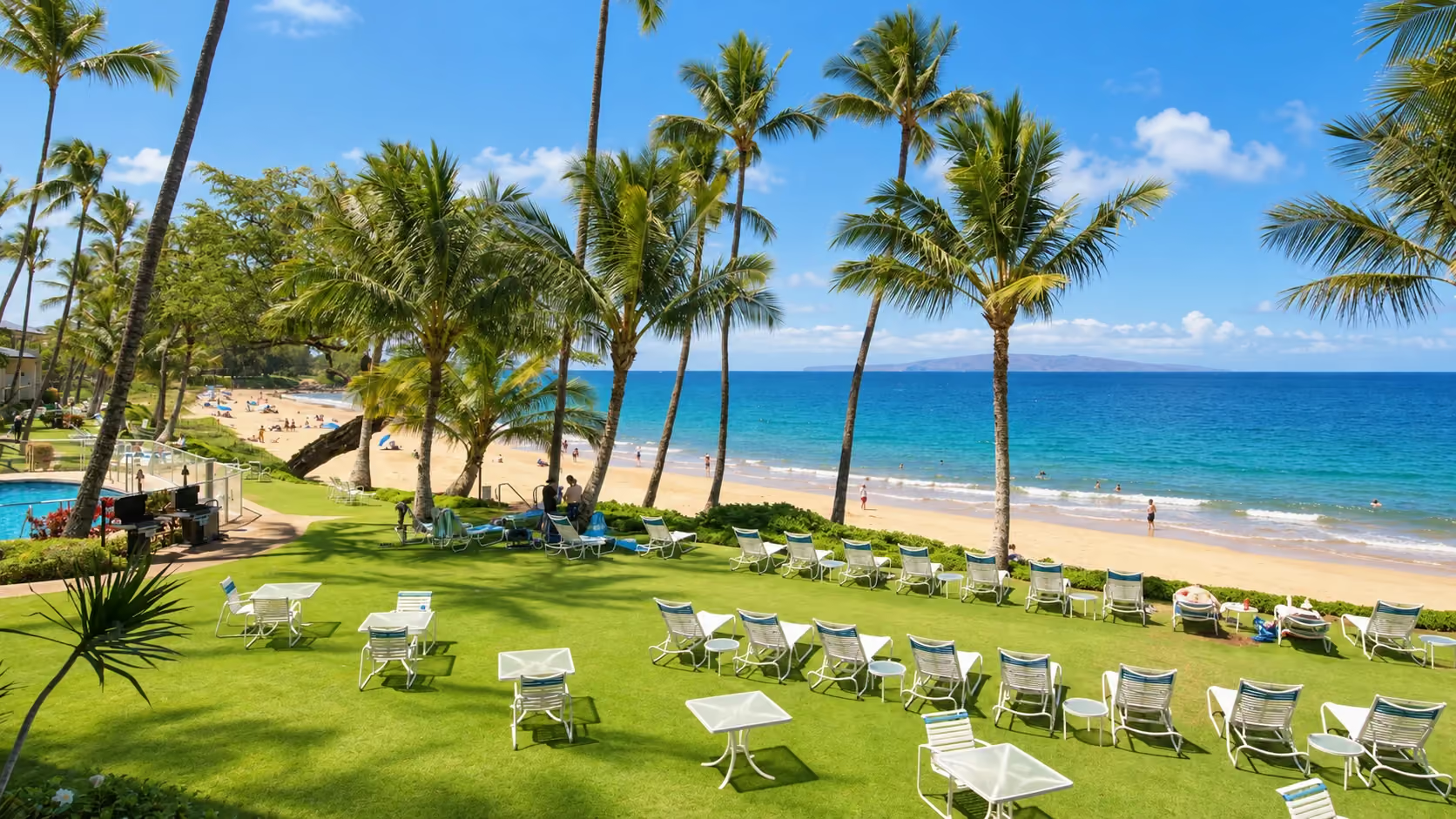
South Maui and West Maui are Maui's two sunny leeward coasts, and the differences that matter to a traveler are drive time, rainfall, and the kind of lodging each one is built around. South Maui covers Māʻalaea, Kīhei, Wailea, and Mākena; it sits about 25 to 30 minutes from Kahului Airport, is the drier coast, and is dominated by condominiums. West Maui covers Lāhainā through Kapalua; it runs about 45 to 60 minutes or more from the airport, gets steadily wetter northward, and is dominated by large beach resorts. The Hale Pau Hana, an oceanfront condominium property in Kīhei, fronts Kamaʻole Beach Park II directly.
Key takeaways
- South Maui covers Māʻalaea, Kīhei, Wailea, and Mākena on the leeward flank of Haleakalā; West Maui covers Lāhainā, Kāʻanapali, Honokōwai, Kahana, Nāpili, and Kapalua on the leeward side of the West Maui Mountains, with Māʻalaea Bay between them.
- South Maui is roughly 25 to 30 minutes from Kahului Airport (OGG); West Maui is roughly 45 to 60 minutes or more, along the Honoapiʻilani Highway.
- Kīhei averages about 10 to 13 inches of rain a year and more than 300 sunny days; Lāhainā is comparably dry, while Nāpili and Kapalua at West Maui's north end average roughly 30 inches or more.
- South Maui lodging skews toward individually owned condominiums with kitchens, typically about $350 to $650 per night in Kīhei, plus Wailea's luxury resorts; West Maui lodging skews toward resorts at Kāʻanapali and Kapalua, which commonly start around $500 with daily resort fees.
- Most Molokini and whale-watching boats leave from Māʻalaea Harbor, which sits between the two coasts, about 15 minutes north of The Hale Pau Hana by car.
Where do South Maui and West Maui sit on the island?
Maui is two volcanoes joined by a flat isthmus, and the two visitor coasts sit on the leeward, sun-facing side of each one. South Maui runs down the western flank of Haleakalā, starting at Māʻalaea and continuing through Kīhei, Wailea, and Mākena until the road ends past La Perouse Bay. West Maui wraps the southwestern and western shoulder of the older West Maui Mountains, starting at Lāhainā and running north through Kāʻanapali, Honokōwai, Kahana, Nāpili, and Kapalua.
Māʻalaea sits at the hinge, the elbow where the isthmus meets the water, which is why so much of the island's ocean activity fleet is based there and why the drive to West Maui passes through it. From The Hale Pau Hana at 2480 South Kīhei Road, Māʻalaea Harbor is about 15 minutes north by car; from there the Honoapiʻilani Highway continues around the pali cliffs to Lāhainā and Kāʻanapali.
The two coasts look at different water. South Maui faces Kahoʻolawe, Molokini, and Lānaʻi; West Maui faces Lānaʻi and Molokaʻi across the Auau Channel. Both are sheltered from the trade winds by high ground behind them, which is why both stay dry, calm, and swimmable while the windward and upcountry parts of the island stay green and wet.
| Coast | Towns and areas | What each area is known for |
|---|---|---|
| South Maui | Māʻalaea | Small harbor village at the bay; departure point for Molokini and whale trips; Maui Ocean Center |
| South Maui | Kīhei | Six miles of beach town along South Kīhei Road; condominium lodging; the three Kamaʻole beach parks |
| South Maui | Wailea | Master-planned luxury resort community; 54 holes of public golf; the paved Wailea Beach Path |
| South Maui | Mākena | Undeveloped state park beaches, Big Beach and Little Beach; snorkeling at Mākena Landing; almost no lodging |
| West Maui | Lāhainā | Historic port town rebuilding after the August 2023 wildfire; harbor reopening in phases |
| West Maui | Kāʻanapali | Three miles of resort beach, the Beach Walk, Whalers Village, and 36 holes of public golf |
| West Maui | Honokōwai, Kahana, and Nāpili | Smaller sheltered bays and mid-range condominiums between the resorts |
| West Maui | Kapalua | Green, breezy resort district; the Plantation Course; Kapalua Bay and the coastal trail |
How long does it take to reach each coast from Kahului Airport?
This is the difference most visitors feel first, especially on arrival day and on the morning of an early departure. South Maui is close to the airport. West Maui is a genuine drive, on a two-lane highway that hugs the coast around the pali and can slow down with construction or afternoon traffic.
| Destination | Approx. distance from OGG | Approx. drive time |
|---|---|---|
| Māʻalaea | About 13 miles | 15 to 20 minutes |
| Kīhei | about 16 miles | About 25 minutes |
| Wailea | About 14 miles | About 25 minutes |
| Mākena | About 17 miles | About 30 minutes |
| Lāhainā | About 27 miles | About 45 minutes |
| Kāʻanapali | About 30 miles | 45 to 55 minutes |
| Nāpili | About 33 miles | About 55 minutes |
| Kapalua | About 35 miles | About 60 minutes |
Treat these as planning estimates and confirm current conditions before you drive, since highway work and afternoon backups toward Lāhainā can add twenty minutes or more. For the South Maui transfer in detail, including rental car pickup and grocery stops on the way, see Kahului Airport to Kīhei.
The gap compounds across a trip. A family based in Kīhei can land, collect a car, shop for groceries, and be on the sand at Kamaʻole Beach Park II inside an hour. The same family based in Kapalua is still driving.
Which coast is sunnier and drier, South Maui or West Maui?
Both coasts are dry by Maui standards, and both sit in a rain shadow. The difference shows up in how much rain falls at the northern end of each coast. South Maui stays dry the whole way down; Kīhei sits behind the bulk of Haleakalā and averages about 10 to 13 inches of rain a year with more than 300 sunny days, which puts it among the driest towns in Hawaii. West Maui starts dry at Lāhainā and gets wetter as you drive north, because the West Maui Mountains stop shielding the coast and trade showers spill over.
| Area | Rough annual rainfall | What it feels like |
|---|---|---|
| Kīhei, South Maui | About 10 to 13 inches | Dry, bright, and hot; brown hillsides; more than 300 sunny days a year |
| Wailea and Mākena, South Maui | Roughly 10 to 15 inches | Same dry pattern, with slightly more afternoon breeze |
| Lāhainā, West Maui | Roughly 10 to 15 inches | Dry and warm, sheltered by the West Maui Mountains |
| Kāʻanapali, West Maui | Roughly 15 to 20 inches | Mostly sunny with short passing showers |
| Nāpili and Kapalua, West Maui | Roughly 30 inches and up | Greener and breezier, with frequent brief trade showers and more wind |
These are long-term averages, and any single week can run against them, so check a current forecast close to your trip. Winter is the wetter season on both coasts, and it is also whale season and the busiest travel period. For how the months differ on the South Maui side, see the best time to visit Kīhei.
Wind matters as much as rain for beach days. Both coasts are glassy in the morning and pick up wind by early afternoon, so snorkeling and paddling are morning activities on either side of the island. Kapalua and the far north end of West Maui are the windiest of the resort areas.
How do the beaches compare between South Maui and West Maui?
Every beach in Hawaii is public by law, on both coasts. The real differences are shape and services. South Maui beaches are mostly county parks with restrooms, showers, and, at the three Kamaʻole parks, Maui County lifeguards on duty daily from 8am to 6:45pm in summer and 7:30am to 6:15pm in winter. West Maui's marquee beach, Kāʻanapali, is a long continuous strand fronting resorts, with public access paths and a paved beach walk running behind it.
| Beach | Coast | Character | Lifeguards | From The Hale Pau Hana |
|---|---|---|---|---|
| Kamaʻole Beach Park II | South Maui, Kīhei | 1,600 feet of golden sand, sand bottom, calmest and clearest of the three Kamaʻole beaches | Daily 8am to 6:45pm in summer and 7:30am to 6:15pm in winter | On property, 0 minutes |
| Keawakapu Beach | South Maui | Long open sand at the Kīhei and Wailea boundary | None | 1 mile, 20-minute walk or 4-minute drive |
| Wailea Beach | South Maui | Manicured crescent fronting the resorts | None | 3 miles, about 10 minutes by car |
| Mākena Big Beach | South Maui | Wide, undeveloped state park sand with a strong shorebreak | Yes, staffed daily, about 8am to 6:45pm in summer and 7:30am to 6:15pm in winter | About 8 miles, 20 to 25 minutes by car |
| Kāʻanapali Beach | West Maui | About 3 miles of sand fronting the resorts, with Puʻu Kekaʻa (Black Rock) at the north end | Daily at Hanakaoo (Canoe) Beach Park at the south end | About 29 miles, 45 to 55 minutes by car |
| Nāpili Bay | West Maui | Small sheltered crescent between rocky points, popular with families | None | About 34 miles, 55 to 65 minutes by car |
| Kapalua Bay | West Maui | Protected bay with easy entry and reliable morning snorkeling | None | About 35 miles, 55 to 70 minutes by car |
Parking is the other practical difference. Maui County's Park Maui program began charging non-resident vehicles at Kamaʻole Beach Parks I and III in July 2026, at about $10 a day with weekly and monthly passes available; Hawaii residents park free, and weekend and holiday parking is held for residents before 10am. Kamaʻole Beach Park II was outside that first phase. Locations and rates can change, so confirm before your trip. In West Maui, public beach lots at Kāʻanapali are mostly free but small and full by mid-morning, while the Whalers Village garage charges by the half hour with validation for purchases. Guests at The Hale Pau Hana skip the question on beach days, since the property's two-acre oceanfront lawn ends at the sand of Kamaʻole Beach Park II.
What is the difference in lodging between South Maui and West Maui?
South Maui is condominium country with a luxury resort district attached. Kīhei's six miles of coastline are lined with individually owned condominiums, most with full kitchens, lanais, and laundry facilities, and Wailea adds five large resorts three miles south. West Maui is the reverse. Kāʻanapali was built as a resort destination in the 1960s and still leads with big beachfront hotels, with condominium clusters at Honokōwai, Kahana, and Nāpili, and Kapalua anchoring the north end.
| Dimension | South Maui | West Maui |
|---|---|---|
| Dominant lodging | Individually owned condominiums in Kīhei; luxury resorts in Wailea | Beachfront resorts at Kāʻanapali and Kapalua; condominium clusters at Honokōwai, Kahana, and Nāpili |
| Typical nightly rate | About $350 to $650 for Kīhei one and two bedroom condos; Wailea rooms generally $500 and up | Kāʻanapali and Kapalua resort rooms commonly start around $500; Nāpili and Kahana condos often run lower |
| Fees | Kīhei condos usually charge a one-time cleaning fee; no resort fee at The Hale Pau Hana, and parking is free | Daily resort fees plus paid or valet parking are common at the large resorts |
| Cooking in | Full kitchens are standard in condos; Foodland is about 2 minutes and Safeway about 7 minutes by car from HPH | Kitchens in the condominium areas; grocery options are more limited near the resorts |
| Feel | Casual beach town in Kīhei, polished resort campus in Wailea | Resort campus at Kāʻanapali and Kapalua, quieter neighborhood feel at Nāpili and Kahana |
| Airport transfer | 18 to 30 minutes | 45 to 60+ minutes |
Two sibling comparisons go deeper on the town-level detail: Kīhei vs Kāʻanapali for condominium against resort across the two coasts, and Kīhei vs Wailea for the same choice inside South Maui. Rates above are 2026 planning ranges; confirm current pricing for your dates before you budget.
Which activities and tours leave from which coast?
Māʻalaea Harbor is the single most useful fact here, and it belongs to neither coast exactly. Sitting at the elbow of the island about 15 minutes north of The Hale Pau Hana, Māʻalaea is the closest harbor to Molokini and to the shallow channel where humpback whales gather from late November through early May. Most Molokini snorkel trips and a large share of whale-watching departures leave from there, with more from the Kīhei Boat Ramp a few minutes south. See Molokini tours from Kīhei and whale watching from Kīhei for departure details and timing.
Lāhainā Harbor is returning. It reopened in December 2025 for a small group of commercial operators during daylight hours, and more have been added since. Availability changes month to month, so book West Maui departures directly with the operator and confirm the meeting point.
Golf splits cleanly. South Maui has Wailea Golf Club's Gold, Emerald, and Blue courses, 54 public holes about 10 to 12 minutes south of The Hale Pau Hana. West Maui has the Kaanapali Golf Courses, with the Royal and Kai courses making 36 public holes, and Kapalua Golf. The Kapalua Bay Course is closed while the golf shop, range, and restaurant stay open. Confirm green fees and course status with each club before planning a round, since published rates change.
Land trips favor South Maui by distance. Haleakalā sunrise, the Road to Hāna, Upcountry, and ʻĪao Valley are all shorter drives from Kīhei than from Kāʻanapali, often by 30 to 45 minutes each way, which matters at 3am for a summit sunrise.
How do dining and shopping compare on the two coasts?
South Maui dining is spread along South Kīhei Road and concentrated at Kihei Kalama Village, 1941 South Kīhei Road, about 0.9 miles north of The Hale Pau Hana, an 18-minute walk or a 3-minute drive, with roughly 14 restaurants and more than 40 shops in one block. For what you can reach on foot from the property, see restaurants within walking distance of HPH. Wailea adds resort signature restaurants and The Shops at Wailea, about 3 miles south. Two full-size supermarkets, Foodland on South Kīhei Road and Safeway at Piʻilani Village, make self-catering straightforward.
West Maui dining clusters at Whalers Village on the Kāʻanapali Beach Walk, inside the Kāʻanapali and Kapalua resorts, and along the reopening stretches of Lāhainā, with small neighborhood spots at Nāpili and Kahana. Front Street reopened to vehicle traffic between Papalaua and Shaw streets on August 1, 2026, and businesses are returning along it, though nearby streets and areas that remain restricted during the recovery are closed for ongoing work. Visitors are encouraged to support businesses that are open while respecting posted signage, avoiding restricted areas, and refraining from photographing fire-impacted sites. Hours and openings in Lāhainā are changing quickly, so check with individual businesses before you drive over.
How should visitors think about Lāhainā and West Maui right now?
The August 2023 wildfire claimed lives, displaced families, and destroyed homes, businesses, and cultural landmarks throughout historic Lāhainā. As recovery and rebuilding continue, visitors are encouraged to follow official guidance, respect private property and residents' privacy, and support West Maui businesses that are open. Kāʻanapali, Nāpili, and Kapalua are welcoming guests, limited daytime commercial operations have resumed at Lāhainā Harbor, and restaurants, shops, and activity providers throughout West Maui continue serving residents and visitors. Please avoid entering restricted areas or photographing fire-affected homes, private properties, and recovery sites.
Choosing accommodations in South Maui does not prevent visitors from spending time in West Maui. Guests staying in Kīhei can plan a considerate day trip to dine at local restaurants, shop with area businesses, or book an activity with a West Maui operator. For a closer look at choosing a South Maui base, see our Kīhei vs. Wailea guide.
Which coast should you choose for your stay?
Both coasts deliver the sunny, calm water Maui is known for. The decision comes down to how much driving you want to do, how you like to eat, and what kind of building you want to sleep in.
Who does South Maui suit best?
- Travelers who want a kitchen, a lanai, and convenient access to laundry facilities for the price of a resort room, with a short airport transfer at each end of the trip.
- Families who value lifeguarded, sand-bottom swimming at the three Kamaʻole beach parks and easy grocery runs.
- Anyone building a trip around Molokini, Turtle Town, whale watching, Haleakalā, or the Road to Hāna, since South Maui is closest to the harbors and the highways that serve them.
- Visitors who want the driest, sunniest weather on the island and are happy with a casual beach town at street level.
Who does West Maui suit best?
- Travelers who want a classic beachfront resort with daily housekeeping, big pool complexes, and everything on one campus.
- Beach walkers who want the continuous Kāʻanapali strand and its paved oceanfront path linking hotels, shops, and restaurants.
- Golfers drawn to the Plantation Course and the Kāʻanapali courses, and to the greener, cooler feel of Kapalua.
- Visitors who want to be close to Lāhainā as it rebuilds, and to spend directly in West Maui.
Can you stay in South Maui and still see West Maui?
Yes, and it is a common plan. Kāʻanapali is about 29 miles northwest of The Hale Pau Hana, roughly a 45 to 55 minute drive through Māʻalaea and around the pali, so a west side day folds easily into a week in Kīhei. Go early, since the return drive is slowest in the late afternoon.
The Hale Pau Hana is an oceanfront condominium property at 2480 South Kīhei Road, operating since 1970, with 68 individually owned rental units across four buildings on two acres. Every unit is oceanfront with a private ocean-facing lanai and a full kitchen, and the property has an on-site laundry facility. The two-acre lawn ends at the sand of Kamaʻole Beach Park II, so there is no road between your lanai and the water. There is a heated oceanfront pool, free parking with one stall per unit, no resort fees, and complimentary coffee on the oceanfront lawn Monday to Saturday, 8am to 10am. Between late November and early May, humpbacks are visible from the lanais. Tripadvisor rates the property 4.7 out of 5 from over 700 reviews, with a 2026 Travelers' Choice award placing it in the top 10 percent of properties worldwide. Browse the units or check availability.
Frequently asked questions
Is South Maui or West Maui closer to Kahului Airport?
South Maui is much closer. Kahului Airport (OGG) sits about 11 to 17 miles from South Maui's towns, so Kīhei is roughly a 25-minute drive, Wailea about 25 minutes, and Mākena about 30. West Maui runs about 27 to 35 miles by road along the Honoapiʻilani Highway, which puts Kāʻanapali at roughly 45 to 55 minutes and Kapalua closer to an hour. Traffic and highway work can add time.
Which side of Maui gets more rain, South Maui or West Maui?
South Maui is the drier coast overall. Kīhei is located on Maui's generally dry leeward side and often experiences sunny conditions, sitting in Haleakalā's rain shadow. Lāhainā is comparably dry, but rainfall climbs as you move north through Kāʻanapali toward Nāpili and Kapalua, where long-term averages reach roughly 30 inches or more. Kapalua is greener, breezier, and sees more passing trade showers, although weather varies throughout the year.
Is West Maui open to visitors in 2026?
Yes. Resorts, restaurants, beaches, and golf courses at Kāʻanapali, Nāpili, and Kapalua are operating, and Lāhainā is steadily reopening as the community rebuilds after the August 2023 wildfire. Front Street reopened to vehicle traffic between Papalaua and Shaw streets on August 1, 2026, and Lāhainā Harbor has been welcoming boat operators back in phases since December 2025. Nearby streets and areas that remain restricted during the recovery are closed for ongoing work, so confirm current access before you go.
Can you day trip from Kīhei to Kāʻanapali?
Yes, and many South Maui guests do. Kāʻanapali sits about 29 miles northwest of The Hale Pau Hana, roughly a 45 to 55 minute drive along the Honoapiʻilani Highway. Leave early, since the afternoon return can be slow. A common plan is a morning at Kāʻanapali Beach and Puʻu Kekaʻa, lunch near Whalers Village, and a stop in Lāhainā before heading back to Kīhei.
Which coast has better snorkeling, South Maui or West Maui?
Both are excellent, and both are best early before the wind picks up. South Maui offers easy shore entries at the Kamaʻole beach parks, Ulua Beach, and Mākena Landing, plus boat access to Molokini and Turtle Town from Māʻalaea Harbor. West Maui's signature site is Puʻu Kekaʻa, known as Black Rock, at the north end of Kāʻanapali Beach, with Kapalua Bay and Nāpili Bay also sheltered and beginner-friendly.
Where do Molokini and whale-watching boats leave from?
Most leave from Māʻalaea Harbor, which sits between the two coasts, about 15 minutes north of The Hale Pau Hana by car. Māʻalaea is the closest harbor to Molokini and to the shallow channel where humpback whales gather between Maui, Lānaʻi, and Kahoʻolawe. Some tours also depart from the Kīhei Boat Ramp and, in growing numbers, from Lāhainā Harbor. Whale season runs late November through early May.
Is South Maui or West Maui better for families?
South Maui suits most families on logistics and cost: condominiums with full kitchens and laundry facilities, two full-size grocery stores in Kīhei, short airport transfers, and lifeguarded sand-bottom swimming at the three Kamaʻole beach parks. West Maui counters with large resort pool complexes, the Kāʻanapali Beach Walk, and Whalers Village. Families with young children often weigh the shorter drive from the airport most heavily.
Which coast is cheaper, South Maui or West Maui?
South Maui usually costs less, largely because its lodging skews toward individually owned condominiums with kitchens and free or included parking. Kīhei one and two bedroom condos commonly run about $350 to $650 per night, while Kāʻanapali and Kapalua resorts often start around $500 and add daily resort fees and paid parking. Wailea sits at the top of South Maui's range. Confirm current rates before you book.
Ready to base yourself on the sunny, close-in coast?
The Hale Pau Hana puts every unit directly on Kamaʻole Beach Park II, about 25 minutes from the airport, with West Maui an easy day trip north. Check availability
Check availability →