The Best Time to Visit Kihei, Month by Month
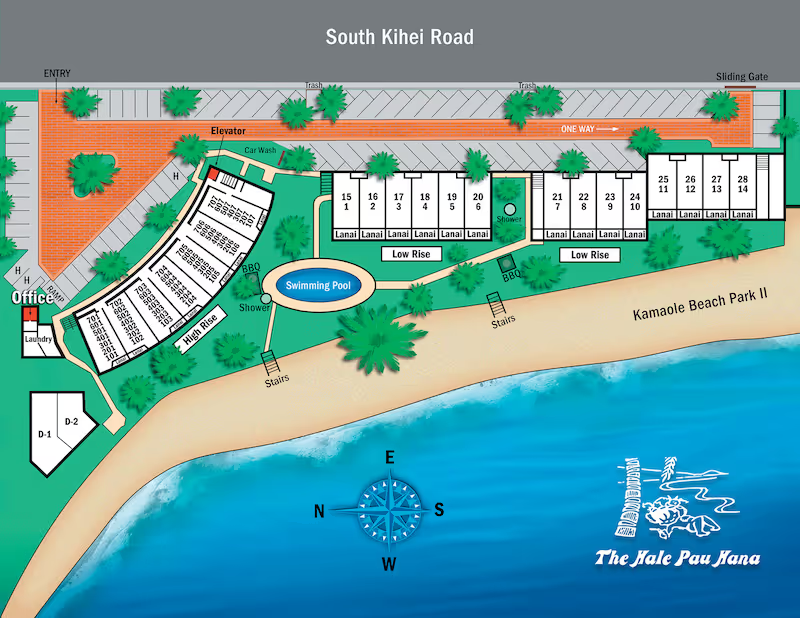
The best time to visit Kihei is April, May, September, or October, when sunny weather, lower prices, and lighter crowds line up; if you want to see humpback whales, come between late November and early May, with peak sightings January to March. There is no bad month: Kihei sits in Haleakala's rain shadow on Maui's leeward coast, with about 10 inches of rain a year and daytime highs in the 80s in every season. The Hale Pau Hana, the only condominium directly fronting Kamaole Beach Park II, faces the same swimmable water and ocean sunset every day of the year.
Key takeaways
- Kihei is a true year-round destination: about 10 inches of rain annually in Haleakala's rain shadow, and daytime highs in the 80s every month.
- The shoulder months of April, May, September, and October offer the best balance of weather, prices, and crowds, with condo rates typically 20 to 30 percent below winter and summer peaks.
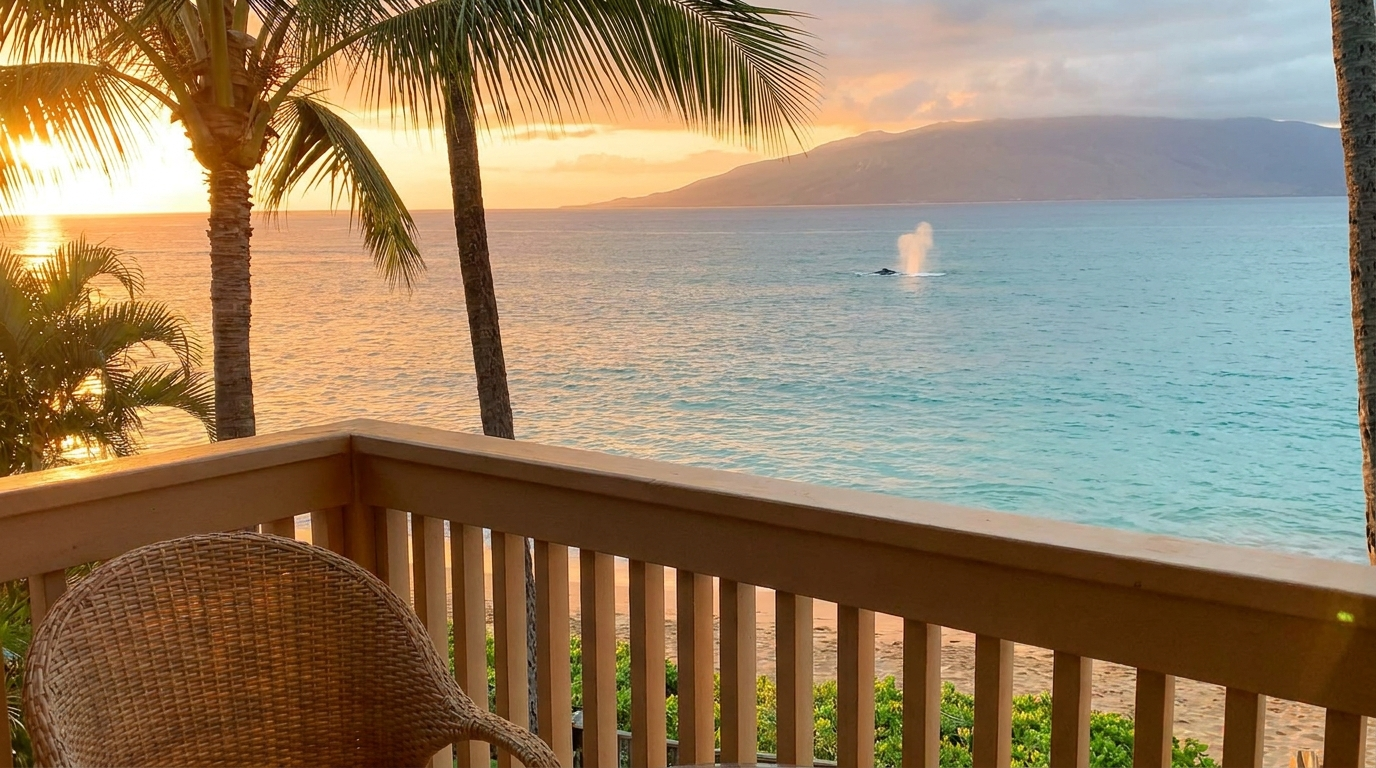
- Whale season runs late November through early May and peaks January to March, when humpbacks are visible from every oceanfront lanai at The Hale Pau Hana.
- The most expensive window is mid-December to early January; Kihei condos generally run $250 to $550 per night, with peak-week averages near $477 in 2026.
- Mornings bring the calmest ocean in every season; May through October is the driest, glassiest stretch for swimming and snorkeling at Kamaole Beach Park II.
Is Kihei really a year-round destination?
Yes, and the reason is geography. Kihei sits on Maui's leeward southwest coast, tucked into the rain shadow of 10,023-foot Haleakala. The trade winds drop most of their moisture on the volcano's windward slopes, so by the time air reaches Kihei it is dry and sunny: the town averages only about 10 inches of rain a year, while parts of East Maui above Hana receive close to 400. Daytime highs run from around 81 degrees in January to the upper 80s in late summer, a narrower swing than most mainland cities see in a single week. What changes through the year is not whether the weather is good, but what is happening offshore, what everything costs, and how many people are sharing the sand. Those are the variables this page compares.
What are Kihei's seasons like?
Kihei has four practical travel seasons that matter more than the calendar ones. Each is genuinely good; each rewards a different kind of trip.
| Season | Weather | Ocean conditions | Crowds | Price level | What is special |
|---|---|---|---|---|---|
| Winter (December to March) | Highs around 80 to 82; occasional brief Kona-storm showers, mostly overnight | Calm mornings; occasional winter swell and afternoon chop | Highest of the year, especially holidays and March | Highest; peak-week condo averages near $477 in 2026 | Peak whale season; humpbacks visible from oceanfront lanais; World Whale Day parade on South Kihei Road in February |
| Spring shoulder (April and May) | Dry season begins; highs low to mid 80s | Glassy mornings, gentle surf; superb visibility for snorkeling | Tapering after Easter; May is one of the quietest months | 20 to 30 percent below winter; strong value | Last whale stragglers in early April; warm, empty beaches before summer families arrive |
| Summer (June to August) | Sunniest and warmest; highs mid to upper 80s with steady afternoon trade winds | Warmest water approaching 80 degrees; periodic south swells bring playful surf | High; family travel peaks late June through early August | High, near winter levels for larger units | Longest days, with sunsets near 7:15pm in mid-July; Fourth of July fireworks offshore of Wailea in recent years |
| Fall shoulder (September to November) | Still dry and warm; highs mid 80s easing through November | Ocean at its warmest in September and October; calm mornings | Lightest of the year; September is the quietest month | Lowest of the year, often 30 percent or more below winter peaks | Locals' favorite season; warm water, open restaurants, easy parking; first whales return late November |
Year-round, the Kihei Fourth Friday town party brings food trucks, live music, and local makers to central Kihei on the fourth Friday of every month, a 5-minute drive or pleasant walk north along South Kihei Road from The Hale Pau Hana.
What is Kihei like month by month?
| Month | Weather | Ocean | Crowds | Prices | What stands out |
|---|---|---|---|---|---|
| January | Coolest month, highs near 81; a passing shower possible | Calm mornings, occasional swell | High | High | Whale season hits full stride; the Maui Oceanfront Marathon runs through oceanfront Kihei mid-month |
| February | Mild and mostly dry | Calm mornings | High | High | Peak whale activity; Pacific Whale Foundation's World Whale Day festivities and parade along South Kihei Road |
| March | Warming, drying | Calm mornings, good clarity | High; spring break | High | Whales still everywhere; book boats and condos months ahead |
| April | Dry season settles in | Glassy mornings | Moderate, easing after Easter | Dropping 20 to 30 percent | Last whale sightings early in the month; shoulder value begins |
| May | Sunny, low 80s | Some of the year's clearest snorkeling water | Low | Low | Arguably the best all-around month: warm, dry, quiet, and well priced |
| June | Sunny, mid 80s | Warm and calm; early south swells | Building mid-month | Rising | School's out; long evenings with 7pm-plus sunsets |
| July | Hot, upper 80s, steady trades | Warm; south swells for bodyboarding | Highest of summer | High | Fourth of July aerial fireworks offshore of Wailea in recent years; fireworks cruises depart Maalaea Harbor |
| August | Warmest stretch | Ocean near 80 degrees | High, thinning late month | High | Peak warm-water swimming; afternoons breezy |
| September | Warm and dry | Warmest water of the year | Lightest of the year | Lowest of the year | The locals' secret: summer weather at the year's best rates |
| October | Warm, dry | Calm and warm | Low | Low | Shoulder value continues; easy restaurant reservations |
| November | Mild; occasional first winter shower | Calm mornings | Low until Thanksgiving week | Low, then spiking for Thanksgiving | First humpbacks of the season usually spotted offshore late in the month |
| December | Mild, highs near 81; brief showers possible | Calm mornings | Quiet first half, packed second half | Moderate, then the year's highest from mid-month | Earliest sunsets, about 5:50pm; whale season opens; holiday peak begins mid-December |
When is whale season in Kihei?
Late November through early May, with peak activity January to March. North Pacific humpback whales winter in the shallow channel between Maui, Lanai, and Kahoolawe, directly offshore from Kihei, and Kamaole Beach Park II faces straight into it. From any of the 80 oceanfront lanais at The Hale Pau Hana you can watch spouts, breaches, and tail slaps with morning coffee in hand; no boat required, though dedicated whale-watch boats depart Maalaea Harbor about 15 minutes north. February is the social peak: Pacific Whale Foundation's Maui Whale Festival events culminate in the World Whale Day celebration and parade along South Kihei Road, which in 2026 marked the foundation's 45th anniversary. For viewing spots, boat options, and timing in detail, see whale watching from Kihei.
When is Kihei cheapest, and when is it most expensive?
Kihei condo rates generally run $250 to $550 per night across the year, but where you land in that range is mostly a matter of dates. The honest pattern:
| Travel window | Typical one-bedroom condo pricing | Notes |
|---|---|---|
| Mid-December to early January | The year's highest; holiday weeks can approach double typical winter rates | Oceanfront units sell out first; minimum-stay rules are common |
| January to March | High; Kihei peak-week averages near $477 in 2026 | Whale season demand plus mainland winter escapes |
| April and May | 20 to 30 percent below winter | The best weather-per-dollar of the first half of the year |
| June to August | High, near winter levels for two-bedroom units | Family demand; book larger units early |
| September and October | The year's lowest, often 30 percent or more below winter peaks | September is typically the single cheapest month |
| Early November to mid-December | Low outside Thanksgiving week | A quiet-season bargain with whales arriving by late November |
Condo math softens every season: full kitchens at The Hale Pau Hana mean breakfast and several dinners at home, there are no daily resort fees, and parking is free with one stall per unit. For how those costs stack up against the resort row 3 miles south, see Kihei vs Wailea; for what true beachfront costs versus across-the-road units, see oceanfront condos in Kihei.
How far ahead should you book a Kihei condo?
| When you are coming | Book about this far ahead | Why |
|---|---|---|
| Mid-December to early January | 9 to 12 months | The tightest inventory of the year; oceanfront units go first |
| Whale season, January to March | 6 to 12 months | Repeat winter guests rebook the same weeks annually |
| Summer, June to August | 4 to 8 months | Two-bedroom units for families are the pinch point |
| Shoulder months: April, May, September, October | 1 to 4 months | The most availability and flexibility of the year |
Booking direct with the property typically gets the best cancellation terms, which matters most for hurricane-season trips in late summer and fall. Browse the units to compare floor plans, or check availability for your dates.
Which months are best for swimming, snorkeling, and surfing in Kihei?
The single most useful rule outranks any month: go in the morning. Kihei's afternoon trade winds put chop on the water in every season, while the hours before about 11am are reliably the calmest and clearest. Within that rule, May through October is the driest, glassiest stretch, with the ocean at its warmest, near 80 degrees, in September and October. Snorkelers find turtles, eels, and reef fish along the rocky points at both ends of Kamaole Beach Park II all year; see snorkeling near The Hale Pau Hana for entry points. Summer south swells bring playful waves for bodyboarding and beginner surf lessons at the Cove, a short drive north. Winter mornings are usually calm too, with whales as the bonus; lifeguards watch Kam II daily from 8am to 4:30pm in every season.
So when should you visit Kihei?
| Traveler type | Best months | Why |
|---|---|---|
| Whale watchers | January to March (season runs late November through early May) | Peak humpback activity in the channel directly off Kamaole Beach Park II; lanai viewing all day |
| Families tied to school breaks | June to August; spring break in March; the December holidays | Warm water, lifeguards daily at Kam II, full kitchens for picky eaters; book 6 to 12 months out |
| Budget travelers | September and October, then May and early December | The year's lowest rates, lightest crowds, and warmest (fall) or clearest (spring) water |
| Snorkel, swim, and surf trips | May through October, mornings | Glassy dry-season water, 80-degree ocean by early fall, and summer south swells for the Cove |
Whichever month you choose, the view from The Hale Pau Hana barely changes: an oceanfront lanai facing the channel toward Lanai and Kahoolawe, sand a few steps away, and the sun setting over the water somewhere between 5:50pm in mid-December and 7:15pm in mid-July. For where to watch it beyond your lanai, see the best sunset spots in Kihei.
Frequently asked questions
What is the rainiest month in Kihei?
December and January are Kihei's wettest months, but wet is relative: the town averages only about 10 inches of rain a year because Haleakala's rain shadow blocks the trade-wind showers that soak East Maui. Winter rain usually arrives in short bursts from passing Kona storms, often overnight, and clears to sunshine. Even in the wettest months, most days in Kihei are beach days.
Is Kihei too hot in the summer?
Not for most visitors. Summer highs reach the mid to upper 80s, but steady afternoon trade winds and ocean water near 80 degrees keep beach days comfortable. Units at The Hale Pau Hana face the water, so lanais catch the breeze, and the heated pool and shade help midday. The warmest stretch is usually late August into September, which is also the quietest and cheapest.
Is December a good time to visit Kihei?
Yes, in two very different halves. Early December is one of Kihei's best-value windows: light crowds, mild weather, and the first humpback whales arriving offshore. From mid-December through early January, the holiday peak brings the year's highest rates and tightest availability, with oceanfront units selling out months ahead. For Christmas on the beach, book six to twelve months out; for value, come the first two weeks.
Is Kihei crowded during spring break?
March is one of Kihei's busiest months: whale season is at its peak while mainland spring breaks run through mid-April. Beaches stay comfortable because Kihei spreads visitors across seven named public beaches along six miles of coastline, but restaurants fill, beach parking lots fill by mid-morning, and condos book out months in advance. Reserve lodging and whale-watch boats early for any March trip.
When does the sun set in Kihei?
Sunset in Kihei ranges from about 5:50pm in mid-December to about 7:15pm in mid-July. Because Kihei faces west across the channel toward Lanai and Kahoolawe, the sun sets over the ocean all year, and every lanai at The Hale Pau Hana looks straight at it. Winter visitors trade shorter evenings for whales; summer visitors get long golden hours for after-dinner beach walks.
Was Kihei affected by the 2023 Maui wildfires?
No. South Maui, including Kihei and Wailea, was unaffected by the August 2023 wildfires, which struck Lahaina on the island's west side. South Maui is open and welcoming visitors while Lahaina recovers, and visiting respectfully supports the island's people and economy. Kaanapali and the rest of West Maui are also open and operating. The timing advice on this page applies normally in every season.
Does hurricane season affect a Kihei trip?
Hawaii's hurricane season runs June 1 through November 30, but direct hits on Maui are rare; the islands more often see passing tropical moisture and elevated surf. Kihei's leeward position keeps it among the driest places on the island even then. Travel insurance is sensible for late-summer and fall trips, and booking direct with the property usually comes with more flexible cancellation terms.
How warm is the ocean in Kihei by season?
Ocean temperatures off Kihei range from about 75 degrees in late winter, February and March, to about 80 degrees in late summer and early fall, September and October. That narrow band means swimming and snorkeling stay comfortable in every month without a wetsuit. Mornings are the calm window year-round; afternoon trade winds put chop on the water in any season.
Whichever month you pick, wake up on the sand
Every one of The Hale Pau Hana's 80 units is oceanfront on Kamaole Beach Park II, with whales offshore in winter and glassy snorkeling water in summer. Check availability for your dates and book direct.
Check availability →


.svg)