Driving From Kihei to Haleakala Sunrise: The Full Plan
Plan to leave The Hale Pau Hana by about 3:00 to 3:30am, because the climb from Kihei to the Haleakala summit takes roughly 1.5 to 2 hours and you want time to park and settle before first light. The summit sits near 10,023 feet, the air is close to freezing at dawn, and the early entry window needs a reservation booked ahead at recreation.gov.

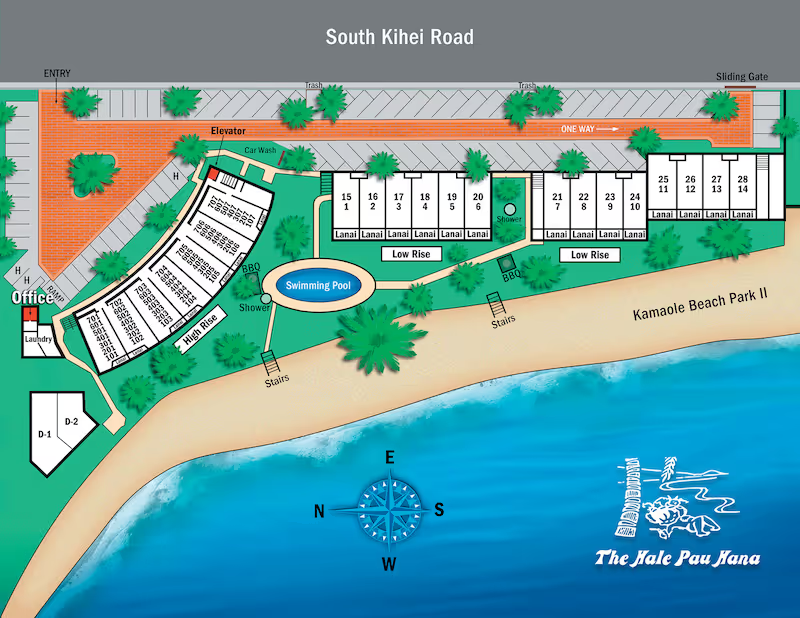
Leave Kihei by about 3:00 to 3:30am. From The Hale Pau Hana, the oceanfront condominium property at 2480 South Kihei Road, Kihei, HI 96753, the drive to the Haleakala summit runs roughly 1.5 to 2 hours up a long, winding mountain road, so an early departure gives you a buffer to park and find a spot at the overlook before the sky lightens. The early entry window from 3am to 7am requires a sunrise reservation booked ahead at recreation.gov. The summit sits near 10,023 feet and is close to freezing at dawn, so pack warm layers.
Key takeaways
- Leave The Hale Pau Hana by about 3:00 to 3:30am, since the climb from Kihei to the Haleakala summit takes roughly 1.5 to 2 hours and you want a buffer before first light.
- The summit stands near 10,023 feet and sits close to freezing at dawn year round, so bring warm layers, a hat, and gloves even in summer.
- Entering the summit area during the sunrise window of 3am to 7am requires a per-vehicle reservation booked ahead at recreation.gov, separate from the park entrance fee.
- The park entrance fee is about $30 per vehicle and is valid for three days, while the sunrise reservation adds a small per-vehicle fee, around $1.
- Haleakala sunset needs no reservation and is far warmer and easier to plan, which makes it the relaxed alternative to the pre-dawn sunrise run.
How early do you leave Kihei for Haleakala sunrise?
Plan your departure backward from the posted sunrise time. The drive from The Hale Pau Hana to the summit is about 1.5 to 2 hours, so a 3:00 to 3:30am departure puts you at the top with time to spare. The last stretch above the park entrance is a steady series of switchbacks in the dark, and you do not want to rush it. Cold, tired drivers and tight mountain curves are a poor combination, so build in a time cushion and keep your speed sensible.
| Step | Clock time | Notes |
|---|---|---|
| Wake and coffee at HPH | 2:30 to 2:45am | Set everything out the night before; layers, snacks, headlamp |
| Depart Kihei | 3:00 to 3:30am | Fuel up the day before; no gas stations near the summit |
| Reach park entrance station | 4:15 to 4:45am | Have your sunrise reservation and entry pass ready |
| Park at a summit overlook | 4:45 to 5:15am | Lots fill early on clear mornings; arrive with a cushion |
| Sunrise | About 5:45 to 7:00am | Varies by season; check the date before you go |
What time does the sun actually rise at the summit?
It depends on the season. Sunrise at the Haleakala summit lands somewhere between about 5:45am in the summer and close to 7:00am in midwinter. Always check the actual sunrise time for your date, then back-time your departure from Kihei so you arrive at least 30 to 45 minutes early. The color show begins well before the sun clears the horizon, and the pre-dawn glow over the sea of clouds is often the best part.
Do you need a reservation for Haleakala sunrise?
Yes. The National Park Service requires a sunrise reservation to enter the high-elevation summit area during the early window, roughly 3am to 7am, and you book it ahead of time at recreation.gov. The reservation is tied to your vehicle, and rangers check it at the entrance station. This is separate from the park entrance fee.
A few planning points worth knowing:
- Reservations open about 60 days ahead, and popular dates can sell out quickly, so book as soon as your travel dates are set.
- A smaller batch of last-minute reservations is released about 48 hours before each date, which is the backup if your first try sells out.
- The reservation carries a small per-vehicle fee, around $1, and it is non-refundable.
- The sunrise reservation does not cover the park entrance fee, so budget for both.
If the sunrise dates you want are gone, the daytime and sunset hours at Haleakala do not require this reservation, which keeps the mountain on the table either way.
How cold is it at the Haleakala summit at sunrise?
Cold enough to surprise people who packed for the beach. The summit near 10,023 feet often sits in the 30s or low 40s Fahrenheit at dawn, and wind chill can push it lower. You are leaving Kihei, where a 70-degree pre-dawn morning is normal, and climbing nearly two miles into the sky in under two hours. The temperature swing is real, and standing still at an exposed overlook makes it feel colder than the number suggests.
Dress in layers you can peel off as the sun warms things up:
- A warm base layer and a fleece or sweater.
- A windproof or waterproof outer jacket; the summit gets gusty and damp.
- Long pants, closed shoes, a beanie, and gloves.
- A blanket from your HPH unit for the wait at the overlook.
- A headlamp or phone light for the dark walk from the parking lot.
There is no concession or warm-up cafe at the summit, so what you carry is what you have. Hot coffee in a thermos, filled before you leave Kihei, earns its place.
Sunrise or sunset at Haleakala, which should you do?
Both deliver the otherworldly summit and the sea of clouds. Sunrise is the iconic, bucket-list version, with the reservation system and the 3am alarm that come with it. Sunset is warmer, simpler to plan, and needs no early-window reservation, which makes it a gentler outing, especially with kids or after a full day in South Maui. Give each its due and pick by your appetite for the pre-dawn effort.
| Haleakala sunrise | Haleakala sunset | |
|---|---|---|
| Reservation | Required for the 3am to 7am window, booked at recreation.gov | Not required for the sunrise window; standard park entry applies |
| Departure from Kihei | About 3:00 to 3:30am | Early-to-mid afternoon, relaxed pace |
| Temperature at summit | Often near freezing at dawn | Cold after dark, but warmer at the actual sunset |
| Crowds | Heavy at the marked overlooks; lots fill early | Lighter, with more room to spread out |
| Best for | The classic bucket-list moment and pre-dawn glow | Families, late risers, and an easier plan |
| The catch | Early alarm, cold wait, and securing a reservation | You are driving down the switchbacks in the dark |
Either way, the park entrance fee of about $30 per vehicle, valid three days, applies, so one ticket can cover a sunrise trip and a separate daytime hike if you go back.
What should you pack for the Haleakala sunrise drive?
Treat it like a short alpine outing that starts from a beach condo. The essentials fall into three buckets: warmth, navigation, and fuel.
- Warmth: layered clothing, a windproof jacket, beanie, gloves, and a blanket. The summit overlook is exposed and the pre-dawn wait is long.
- Navigation and safety: a full tank of gas before you leave Kihei, a headlamp or phone light, and a downloaded map, since cell service is spotty on the upper mountain.
- Fuel for you: water, snacks, and a thermos of hot coffee or tea. Altitude and cold both sap energy, and there is nothing to buy at the top.
A quick altitude caution: because the summit exceeds 10,000 feet, altitude sickness is possible on the fast climb from sea level in Kihei. Move slowly and descend if you develop nausea, headache, dizziness or shortness of breath. NPS advises pregnant visitors and people with heart or respiratory conditions to consult their doctor before visiting or hiking in the Summit Area, and that scuba divers wait before driving to elevation after diving. Confirm the current guidance at nps.gov/hale.
Frequently asked questions
How long is the drive from Kihei to the Haleakala summit?
Plan on about 1.5 to 2 hours from The Hale Pau Hana to the summit. The route climbs steadily from sea level in Kihei to over 10,000 feet on a long succession of switchbacks, so it is slower than the mileage suggests. Drive it in daylight at least once if you can, and never rush the curves in the dark. Leaving Kihei by 3:00 to 3:30am gives you a comfortable buffer to reach the summit, park, and settle before the sky begins to lighten.
Do you have to make a reservation for Haleakala sunrise?
Yes. The National Park Service requires a per-vehicle sunrise reservation to enter the summit area during the early window, roughly 3am to 7am, and you book it ahead at recreation.gov. Rangers check it at the entrance station, and it is separate from the park entrance fee. Popular dates sell out, so reserve as soon as your plans are set. A smaller batch of last-minute reservations is usually released a couple of days before each date if your first attempt comes up empty.
How much does it cost to enter Haleakala National Park?
The park entrance fee is about $30 per private vehicle and is valid for three days, which can cover a sunrise trip and a return daytime visit on the same ticket. The sunrise reservation is separate and carries a small per-vehicle fee, around $1, that is non-refundable. If you hold an annual national parks pass, it covers the entrance fee, but you still need the sunrise reservation for the early window. Budget for both line items, and confirm current fees and rules at nps.gov/hale when you plan.
What time does the sun rise at Haleakala?
It varies with the season, landing somewhere between about 5:45am in summer and close to 7:00am in midwinter. Check the actual sunrise time for your specific date, then back-time your departure from Kihei so you arrive at least 30 to 45 minutes early. The pre-dawn glow over the cloud layer often outshines the moment the sun clears the horizon, so you want to be in place and settled well before the posted time, with no need to race the light up the mountain.
What should you wear for Haleakala sunrise?
Dress for near-freezing temperatures, even in summer. Layer a warm base, a fleece or sweater, and a windproof outer jacket, then add long pants, closed shoes, a beanie, and gloves. The summit near 10,023 feet is exposed and often gusty, and standing still at the overlook makes it feel colder than the reading. Bring a blanket from your HPH unit and a thermos of something hot. There is no warm-up spot at the top, so plan to be self-sufficient through the wait for first light.
Is the altitude at Haleakala a problem for some visitors?
It can be. Because the summit exceeds 10,000 feet, altitude sickness is possible on such a fast ascent from sea level in Kihei. Move slowly and descend if you develop nausea, headache, dizziness or shortness of breath. NPS advises pregnant visitors and people with heart or respiratory conditions to consult their doctor before visiting or hiking in the Summit Area, and that scuba divers wait before driving to elevation after diving. Most healthy visitors are fine with a little caution. Confirm the current guidance at nps.gov/hale.
Can you watch Haleakala sunset without a reservation?
Yes. The sunrise reservation requirement applies only to the early entry window, roughly 3am to 7am, so sunset and daytime visits need only standard park entry. Sunset is the easier plan: you leave Kihei in the afternoon at a relaxed pace, the summit is warmer at the actual sunset than at dawn, and crowds are usually lighter. The trade-off is driving the switchbacks down in the dark afterward, so take it slow and use your low beams on the curves.
Is the Haleakala sunrise drive safe in the dark?
It is, with care. The road is paved and well engineered, but it is a long climb of tight switchbacks with no lighting, occasional fog, and the chance of cattle or nene crossing near the lower elevations. Start with a full tank, since there are no gas stations near the summit, and get a solid block of sleep before you drive. Keep your speed down on the curves, use pullouts to let faster cars pass, and watch for cyclists on the descent. If you are nervous about the drive, a guided sunrise tour handles it for you.
Ready to base your Haleakala sunrise trip in Kihei?
The Hale Pau Hana puts you at 2480 South Kihei Road, an oceanfront launch pad for the pre-dawn drive up the mountain and a warm bed to return to. Every unit is oceanfront on Kamaole Beach Park II, with complimentary coffee on the oceanfront lawn Monday to Saturday, 8am to 10am for the morning after. Browse available units, then check availability or call +1-808-879-2715.
Check availability →


.svg)