Kīhei vs. Kāʻanapali: Which Is Better for Your Maui Trip?
Kīhei and Kāʻanapali sit on opposite coasts of Maui, about 29 miles and 45 to 55 minutes apart. One is a condominium beach town with lifeguarded public beaches and grocery stores; the other is a master-planned resort strip along three miles of continuous sand. Here is how they compare on cost, weather, beaches, and the drive in from the airport.
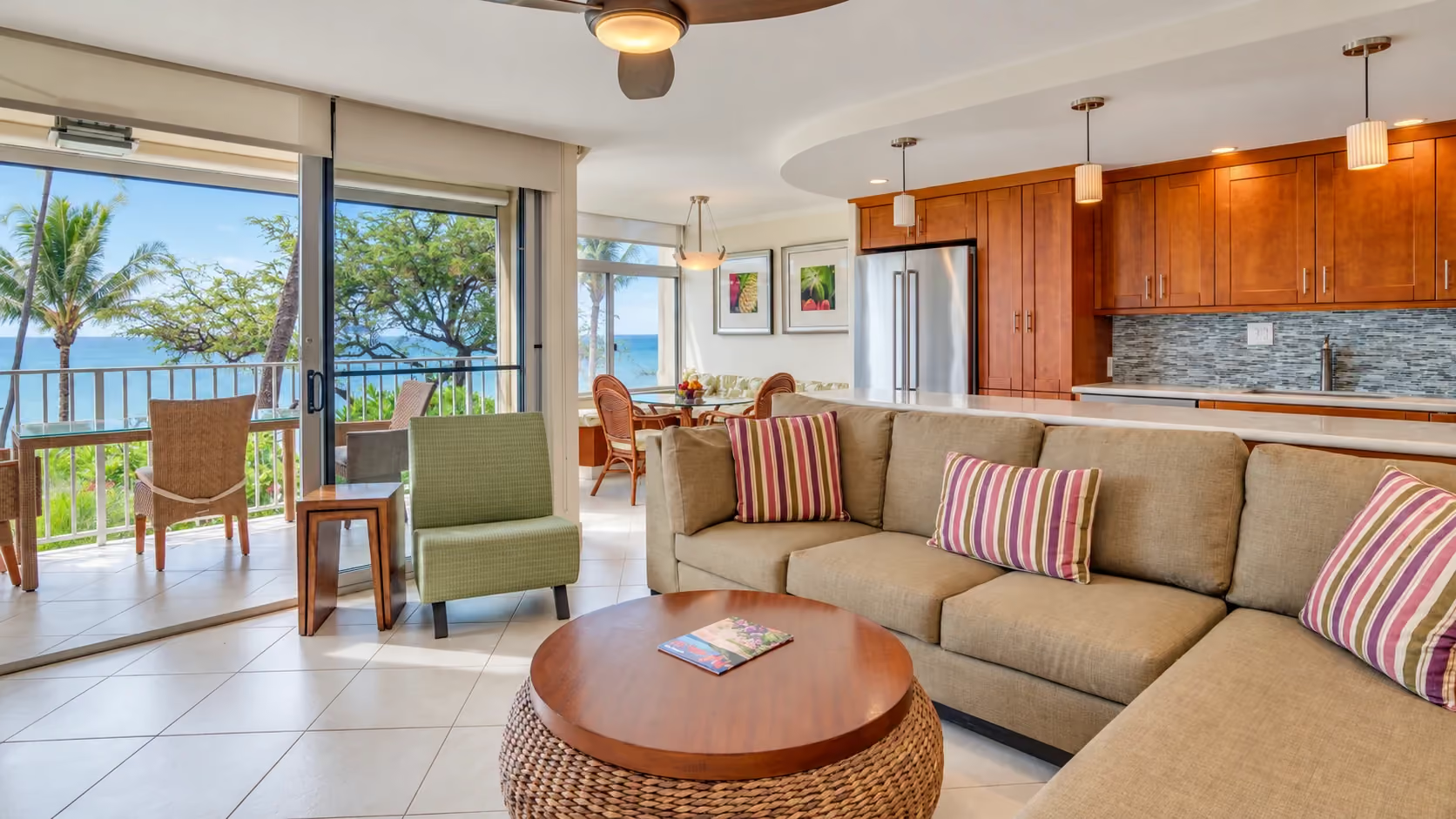
Choose Kīhei if you want an oceanfront condominium with a kitchen, lifeguarded swimming beaches, a short airport transfer, and a lower total trip cost. Choose Kāʻanapali if you want a full-service West Maui resort, one long resort beach, and hotel amenities within a few steps of your room. The two sit on opposite shores about 29 miles apart, a 45 to 55 minute drive. Kīhei also sits about 25 minutes from Kahului Airport, against roughly an hour to Kāʻanapali. The Hale Pau Hana, the only condominium fronting Kamaʻole Beach Park II in Kīhei, puts every guest directly on the sand.
Key takeaways
- Kīhei is in South Maui and Kāʻanapali is in West Maui, roughly 29 miles and 45 to 55 minutes apart by car on Honoapiʻilani Highway.
- Kahului Airport is about 16 miles and about 25 minutes from Kīhei, and about 30 miles and 45 to 60 minutes from Kāʻanapali.
- Kīhei lodging is mostly individually owned condominiums with kitchens, typically about $350 to $650 per night; Kāʻanapali is anchored by large beachfront resorts where rooms commonly run about $350 to $700 plus daily resort and parking fees.
- Kīhei has seven public beaches and three lifeguarded county beach parks, Kamaʻole I, II, and III, staffed daily 8am to 6:45pm in summer and 7:30am to 6:15pm in winter; the resort core of Kāʻanapali Beach has no lifeguard tower, and the nearest one sits at Hanakaoo Beach Park at the south end.
- The Hale Pau Hana, an oceanfront condominium property at 2480 South Kīhei Road, Kīhei, HI 96753, fronts Kamaʻole Beach Park II directly, and Kāʻanapali is an easy day trip from it.
How far apart are Kīhei and Kāʻanapali?
Kīhei sits on Maui's leeward south shore. Kāʻanapali sits on the leeward west shore, past Lāhainā. Between them the road runs north out of Kīhei, past Māʻalaea Harbor, around the pali on Honoapiʻilani Highway, and through the Lāhainā bypass to the resort entrances. Plan on 45 to 55 minutes for the roughly 29 miles, and allow longer in afternoon traffic or when lane work slows the highway. It is a scenic drive with turnouts for whale spotting in winter, and it is long enough that most travelers pick one side as a base and treat the other as a day trip.
How long does the drive from The Hale Pau Hana take?
| Destination | Approx. distance from HPH | Travel time |
|---|---|---|
| Māʻalaea Harbor | about 11 miles | about 15 minutes |
| Hanakaoo Beach Park, south end of Kāʻanapali Beach | about 27 miles | 40 to 50 minutes |
| Whalers Village, mid Kāʻanapali | about 29 miles | 45 to 55 minutes |
| Puʻu Kekaʻa (Black Rock), north end of Kāʻanapali Beach | about 29 miles | 45 to 55 minutes |
| Kahekili Beach Park, North Kāʻanapali | about 30 miles | 50 to 60 minutes |
Distances and times are estimates for planning; check live traffic before you set out, since Honoapiʻilani Highway is the only practical route and construction periodically narrows it. For the wider regional picture, see South Maui vs West Maui.
What is the main difference between Kīhei and Kāʻanapali?
Kīhei is a six-mile beach town built around individually owned condominiums and county beach parks, with grocery stores, casual restaurants, and free or low-cost parking woven through it. Kāʻanapali is Maui's first master-planned resort area: roughly 3 miles of nearly continuous sand backed by large hotels, resort condominiums, two public golf courses, and a beachfront shopping center. Both are dry, sunny, and leeward. They differ in what you sleep in, what you pay for, and how much you cook.
| Dimension | Kīhei | Kāʻanapali |
|---|---|---|
| Lodging type | Individually owned condominiums, most with full kitchens, lanais, and laundry facilities | Large beachfront resorts including the Hyatt Regency Maui, Westin Maui, Sheraton Maui, Marriott Maui Ocean Club, Kaanapali Beach Hotel, and Royal Lāhainā, plus resort condominiums and villas |
| Typical nightly rate (2026) | About $350 to $650 for one and two bedroom condos | Rooms commonly about $350 to $700, higher in winter at the beachfront resorts, before fees |
| Daily fees | No resort fee; a one-time cleaning fee is standard | Resort fees commonly about $45 to $60 per night, with parking often billed separately |
| Beaches | Seven named public beaches across about six miles of shoreline | One nearly continuous resort beach about 3 miles long, plus county parks at each end |
| Lifeguards | Daily 8am to 6:45pm in summer and 7:30am to 6:15pm in winter at Kamaʻole Beach Parks I, II, and III | None in the resort core; the nearest tower is at Hanakaoo Beach Park (Canoe Beach) |
| Snorkeling | Rocky points at each end of Kamaʻole Beach Park II, with reef about 40 yards offshore | Puʻu Kekaʻa (Black Rock) at the north end of the beach, one of Maui's best shore-entry sites |
| Dining and groceries | Casual local dining along South Kīhei Road, plus two full-size grocery stores for self-catering | Resort restaurants and Whalers Village; the nearest full grocery stores are in Honokōwai and on Honoapiʻilani Highway |
| Walkability | Sidewalk corridor along South Kīhei Road linking beaches, markets, and restaurants | Paved beachfront path linking the resorts, Whalers Village, and the beach |
| Airport transfer | about 16 miles, about 25 minutes | About 30 miles, 45 to 60 minutes |
| Atmosphere | Casual, lived-in beach town | Polished resort strip with a shared beach |
| Who it suits | Self-catering travelers, families, longer stays, value seekers | Travelers who want resort service, one beach, and West Maui on their doorstep |
How much does it cost to stay in Kīhei vs Kāʻanapali?
Kīhei is meaningfully cheaper for comparable proximity to the water, and the gap widens once you count the extras. Kāʻanapali's large resorts typically add a daily resort or amenity fee and then bill parking separately, which together can add a meaningful amount per day before you have eaten anything; ask each property for its current figures. Kīhei condominiums generally charge a one-time cleaning fee with no nightly add-on, and parking is usually included. At The Hale Pau Hana, parking is free with one stall per unit, there are no resort fees, and there is no cleaning fee.
| Cost item | Typical Kīhei condominium | Typical Kāʻanapali resort |
|---|---|---|
| Nightly rate | About $350 to $650 for a one or two bedroom unit | About $350 to $700 for a room, higher in winter at beachfront properties |
| Daily resort fee | None; a one-time cleaning fee is standard | Commonly about $45 to $60 per night |
| Parking | Usually free; free at The Hale Pau Hana, one car per unit | Commonly about $40 to $55 per night for self or valet parking |
| Meals | Cook in your unit; Foodland is about 2 minutes and Safeway about 7 minutes by car from HPH | Resort restaurants and Whalers Village dining; groceries are a drive to Honokōwai or the highway |
| Beach parking | Free street parking on South Kīhei Road; Park Maui charges non-resident vehicles at the Kamaʻole I and III paved lots | Limited free public stalls at the resorts; the Whalers Village garage charges by the hour |
These are planning ranges for 2026, and rates move with season and property, so confirm current rates and fees before you book. A kitchen changes the arithmetic on a week-long trip: breakfast and a few dinners cooked at home can offset several hundred dollars. For how Kīhei prices compare against the resort row three miles south instead, see Kīhei vs Wailea.
Which has better beaches, Kīhei or Kāʻanapali?
Travelers who prefer one long beach connected by a resort walkway may favor Kāʻanapali. Those who enjoy several distinct public beaches with different settings may prefer Kīhei. Kāʻanapali Beach is roughly 3 miles of soft, nearly continuous sand with deep water close in, resort lawns behind it, and Puʻu Kekaʻa anchoring the north end. Kīhei spreads its sand across seven separate public beaches, three of which are staffed county parks with lifeguards, restrooms, showers, and picnic areas. Every beach in Hawaii is public by law, so both are open to everyone; the practical differences are lifeguard coverage, parking, and how the water behaves.
Lifeguard coverage is the honest divide. Kamaʻole I, II, and III are staffed daily from 8am to 6:45pm in summer and 7:30am to 6:15pm in winter by Maui County lifeguards. The Kāʻanapali resort core has no tower, and the nearest staffed one sits at Hanakaoo Beach Park (Canoe Beach) at the southern end of the sand, one of only two lifeguard towers on the West Maui coast. Kāʻanapali's shorebreak can also be sharp when a north or west swell runs, while Kamaʻole Beach Park II has a sand bottom and the calmest, clearest morning water of the three Kamaʻole beaches.
| Beach | Area | Lifeguards | Parking | From The Hale Pau Hana |
|---|---|---|---|---|
| Kamaʻole Beach Park II | Kīhei | Daily 8am to 6:45pm in summer and 7:30am to 6:15pm in winter | Free street parking on South Kīhei Road | On property, 0 minutes |
| Kamaʻole Beach Park I | Kīhei | Daily 8am to 6:45pm in summer and 7:30am to 6:15pm in winter | Paved lot, Park Maui fee for non-resident vehicles | 0.3 miles, 6-minute walk |
| Kamaʻole Beach Park III | Kīhei | Daily 8am to 6:45pm in summer and 7:30am to 6:15pm in winter | Paved lot, Park Maui fee for non-resident vehicles | 0.3 miles, 6-minute walk |
| Charley Young Beach | Kīhei | None | Free street parking | 0.4 miles, 8-minute walk |
| Keawakapu Beach | Kīhei to Wailea border | None | Small free lots | 1 mile, 20-minute walk or 4-minute drive |
| Kāʻanapali Beach, resort core | Kāʻanapali | None | Limited free public stalls at the resorts; paid garage at Whalers Village | About 29 miles, 45 to 55 minutes by car |
| Hanakaoo Beach Park (Canoe Beach) | South end of Kāʻanapali | Yes | Free county lot | About 27 miles, 40 to 50 minutes by car |
| Kahekili Beach Park | North Kāʻanapali | None | Free county lot | About 30 miles, 50 to 60 minutes by car |
One 2026 change worth knowing: Maui County's Park Maui program began charging non-resident vehicles at the paved lots at Kamaʻole Beach Park I and Kamaʻole Beach Park III in July 2026, at roughly $10 a day with weekly and monthly passes available. Kamaʻole Beach Park II was left out of the first phase, and street parking along South Kīhei Road remains free. Guests at The Hale Pau Hana walk onto Kam II from the lawn and park free on property, so the program does not affect them. Confirm current Park Maui coverage and rates before your trip. For how the three Kamaʻole parks differ, see Kamaʻole Beach I vs II vs III.
Is Kīhei sunnier and drier than Kāʻanapali?
Both towns sit in a rain shadow, and both are dry by Hawaii standards. Kīhei is the drier and sunnier of the two. Tucked under Haleakalā's leeward flank, it collects roughly 10 to 13 inches of rain a year and logs 300 or more sunny days, which is why South Maui is the island's default choice for guaranteed beach weather in winter. Kāʻanapali is also dry and warm, and it sees somewhat more cloud and passing shower activity in winter as weather spills around the West Maui Mountains. The gap is small in summer and most noticeable from December through March, when a South Maui morning is more reliably clear.
Wind behaves differently too. Kīhei's afternoon trades pick up on most days, which cools the beach and flattens by evening. Kāʻanapali is often calmer through the afternoon and can feel warmer for it. Whichever coast you pick, plan snorkeling and ocean time for the morning, when the water on both sides is at its clearest.
What does Kāʻanapali offer that Kīhei does not?
Four things stand out, and all four are worth a day trip from South Maui.
- Puʻu Kekaʻa, known as Black Rock. The lava promontory at the north end of Kāʻanapali Beach is one of Maui's best shore-entry snorkel sites, with clear water, tropical fish, and green sea turtles close in. Go early, before the wind and the crowd.
- The nightly cliff diving ceremony. At sunset, a diver lights the torches along Puʻu Kekaʻa, throws a lei into the sea, and leaps from the rock, honoring the tradition tied to Chief Kahekili. The Sheraton Maui runs it and it is free to watch from the beach. Timing follows sunset, so confirm the current start time on the day.
- Whalers Village. An open-air beachfront center in the middle of the resort strip with a broad selection of shops and restaurants, typically open daily 9am to 9pm. Its garage charges by the hour with validation available on purchases; confirm current hours and validation terms before you go.
- The Kāʻanapali Beach Walk. A paved shoreline path threading the resort lawns from the Sheraton at Black Rock past Whalers Village toward the Hyatt Regency and Hanakaoo Beach Park, roughly a mile and a half through the resort core and longer if you continue north. It is level, shaded in stretches, and lovely at sunset.
Kīhei has its own equivalents: the rocky points off Kamaʻole II for snorkeling, Kihei Kalama Village for casual shopping and dinner, and sunsets from the beach in front of your unit. See snorkeling near The Hale Pau Hana and sunset spots in Kīhei.
Where is whale watching better, Kīhei or Kāʻanapali?
Both are outstanding, and neither has a real edge from shore. North Pacific humpbacks gather in the sheltered water between Maui, Lānaʻi, Molokaʻi, and Kahoʻolawe from late November through early May, with the peak from January through March. Kāʻanapali watches them from resort lawns and the beach walk across the Auau Channel. Kīhei watches them from the same channel system a little further south, from beaches, lanais, and the coastal highway pullouts.
The practical difference is where you are standing when a whale breaches. At The Hale Pau Hana every unit is oceanfront with a private ocean-facing lanai, so whale watching happens with coffee in hand and no drive at all. Boat trips run from Māʻalaea Harbor, about 15 minutes north of Kīhei by car, and from West Maui harbors on the Kāʻanapali side. For the full seasonal detail, see whale watching from Kīhei.
Who should choose Kīhei, and who should choose Kāʻanapali?
Both are strong bases. The decision usually comes down to lodging style, budget, and how much driving you want to do from the airport and to your activities.
Who is Kīhei best for?
- Travelers who want a full kitchen, a washer-dryer, and space to spread out for the price of a resort room.
- Families who value lifeguarded, sand-bottom swimming at the Kamaʻole beach parks and easy grocery runs; see family-friendly Kīhei condos.
- Anyone flying in late or out early, since Kahului Airport is about 25 minutes away; see Maui airport to Kīhei.
- Trips built around Haleakalā sunrise, Molokini, Turtle Town, or the Road to Hāna, which all start closer to South Maui.
- Longer stays, where self-catering, free parking, and no resort fees compound week over week.
Who is Kāʻanapali best for?
- Travelers who want full resort service: daily housekeeping, multiple pools, activity desks, and restaurants downstairs.
- People who prefer one long beach with everything on it, reached on foot from their room.
- Visitors focused on West Maui: Puʻu Kekaʻa snorkeling, the beach walk, Kapalua, and Nāpili all sit within a short drive.
- Golfers who want two public courses inside the resort area.
- Anyone happy to trade a longer airport transfer for a room that opens onto the sand.
Can you stay in Kīhei and still enjoy Kāʻanapali?
Yes, with a little planning for the drive. A well-paced day looks like an early start from Kīhei, snorkeling at Puʻu Kekaʻa before the wind, lunch and browsing at Whalers Village, an hour on the beach walk, and the cliff diving ceremony at sunset before heading south. Budget about two hours of driving in total and fuel up before you go.
A note on West Maui before you go: Kāʻanapali, Whalers Village, the beach walk, and the beaches are open, and visitor spending supports the community while Lāhainā rebuilds. Please give the fire-affected area privacy and spend your day with the West Maui businesses that are welcoming guests. Compare the two regions in our South Maui vs. West Maui guide.
Basing in Kīhei keeps that day trip optional and keeps the rest of the week simple. The Hale Pau Hana is an oceanfront condominium property that has operated since 1970, with 80 individually owned units across four buildings on two acres, every unit oceanfront, directly on Kamaʻole Beach Park II. The two-acre lawn ends at the sand, so there is no road to cross. There is a heated oceanfront pool, a full kitchen in every unit, free parking with one stall per unit, and complimentary coffee on the oceanfront lawn Monday to Saturday, 8am to 10am. Tripadvisor rates the property 4.7 out of 5 from over 700 reviews, with a 2026 Travelers' Choice award placing it in the top 10 percent of properties worldwide. Browse the units or check availability.
Frequently asked questions
Is Kīhei or Kāʻanapali better for a first trip to Maui?
Both work well. Kīhei suits first-timers who want a kitchen, lifeguarded swimming beaches, an 18-minute airport transfer, and a central base for Haleakalā, Molokini, and the Road to Hāna. Kāʻanapali suits first-timers who want full resort service, one long beach, and West Maui sightseeing on their doorstep. Kīhei is the shorter drive from Kahului Airport by roughly 30 to 40 minutes.
How long does it take to drive from Kīhei to Kāʻanapali?
Plan on 45 to 55 minutes each way, and longer in afternoon traffic or when lane work slows Honoapiʻilani Highway. From The Hale Pau Hana at 2480 South Kīhei Road the route runs north past Māʻalaea, around the pali, and through the Lāhainā bypass to the Kāʻanapali resort entrances, roughly 29 miles. Leave early for a morning snorkel at Puʻu Kekaʻa.
Can you visit Kāʻanapali as a day trip from Kīhei?
Yes, and many South Maui guests do. A common plan is an early start for snorkeling at Puʻu Kekaʻa (Black Rock), lunch and shopping at Whalers Village, a stroll on the paved Kāʻanapali Beach Walk, and the Sheraton Maui cliff diving ceremony at sunset before the drive home. Budget about two hours of driving in total and confirm current ceremony timing.
Is Kīhei or Kāʻanapali cheaper?
Kīhei, usually by a wide margin once add-ons are counted. Kīhei condominiums typically run about $350 to $650 per night with a kitchen, free or street parking, and no daily resort fee. Kāʻanapali resort rooms commonly start around $350 to $700, with daily resort fees near $45 to $60 and parking near $40 to $55. Confirm current rates and fees before booking.
Does Kāʻanapali Beach have lifeguards?
The resort core of Kāʻanapali Beach has no lifeguard tower. The nearest staffed tower sits at Hanakaoo Beach Park (Canoe Beach) at the south end of the sand. Kīhei has three lifeguarded beach parks, Kamaʻole I, II, and III, staffed daily from 8am to 6:45pm in summer and 7:30am to 6:15pm in winter. Kamaʻole Beach Park II, fronting The Hale Pau Hana, has a sand bottom and the calmest morning water of the three.
Is Kīhei or Kāʻanapali better for whale watching?
Both are excellent, because both look onto the sheltered water where North Pacific humpbacks gather from late November through early May, with a peak from January through March. Kāʻanapali watches them from resort lawns; Kīhei watches them from oceanfront lanais, and every unit at The Hale Pau Hana faces the water. Boats leave from Māʻalaea Harbor, about 15 minutes north of Kīhei.
Is Kāʻanapali open to visitors?
Yes. The Kāʻanapali resorts, Whalers Village, the beach walk, and the beaches are open and operating, and West Maui businesses welcome visitor support while Lāhainā rebuilds. Please treat the fire-affected area as a community and give it privacy. Compare the two regions in our South Maui vs. West Maui guide. Confirm current access and hours before you go.
Is Kīhei sunnier than Kāʻanapali?
Both sit on leeward, rain-shadowed coasts and both are dry by Hawaii standards. Kīhei is generally the drier and sunnier of the two, with roughly 10 to 13 inches of rain a year and 300 or more sunny days, sheltered by Haleakalā. Kāʻanapali is also dry, and it sees somewhat more cloud and passing shower activity spilling off the West Maui Mountains in winter.
Ready to base yourself on the sand in South Maui?
The Hale Pau Hana puts every unit directly on Kamaʻole Beach Park II, about 25 minutes from the airport, with Kāʻanapali an easy day trip up the coast. Check availability
Check availability →